

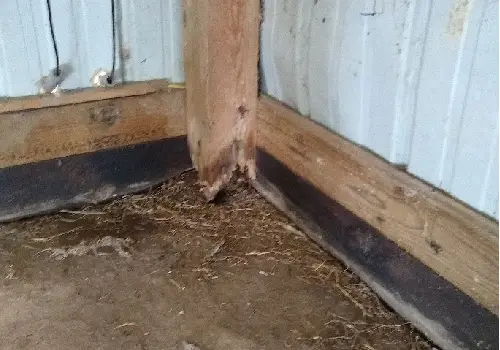
Wood columns are fundamental to traditional post-frame construction, but their location at or below grade can also expose them to conditions that promote deterioration. If you’re asking, “How do I keep my pole barn posts from rotting?”, the answer starts with controlling moisture, choosing appropriate materials, protecting vulnerable portions of the column, and regularly inspecting the building.
For contractors, this isn’t only a new-construction concern. Thousands of existing agricultural, commercial, and storage buildings throughout Illinois and the Midwest rely on embedded wood columns. Knowing how to identify, prevent, and address pole barn post rot can give contractors another valuable service to offer customers with aging post-frame buildings. That’s where Anthem Built can help.
Wood decay requires the right environmental conditions to develop. In post-frame buildings, the area near the ground line can be particularly vulnerable because columns may encounter soil and recurring moisture.
Several conditions can increase that exposure:
Embedded wood can be exposed to moisture and organisms within the surrounding soil.
Water that repeatedly collects near a column creates unfavorable long-term conditions.
Condensation and inadequate ventilation can contribute to elevated moisture levels within a building.
Columns not appropriately treated for their exposure conditions may be more vulnerable to deterioration.
Midwest weather makes moisture management especially important. Rain, snow, humidity, and repeated seasonal changes mean contractors need to think about both the column itself and the conditions surrounding it.
Preventing deterioration starts before the first column is installed. The foundation design, wood treatment, drainage, and column protection strategy all influence long-term exposure.
One approach is separating the wood column from direct ground contact through an appropriate concrete pier, footing, or other foundation system. This changes how the post interacts with moisture at grade and can reduce direct exposure to soil. The appropriate foundation method should always be determined by the project's design, site conditions, loads, and applicable requirements.
When wood is intended for structural ground-contact applications, the treatment needs to match the exposure. The original Anthem Built guidance specifies UC4B as the minimum treatment category for these applications. Contractors should verify treatment requirements and product specifications rather than assuming any pressure-treated lumber is appropriate for an embedded structural column.
Good drainage is one of the most practical ways to reduce persistent moisture around posts.
Site grading should move water away from the building instead of allowing it to collect along the exterior. Depending on site conditions, additional drainage measures may also be appropriate. This is especially important around agricultural buildings, shops, and equipment storage structures where surrounding grades and drainage patterns can change over years of use.
Physical barriers can help separate wood from surrounding soil and moisture. Post protectors and other purpose-built components can be incorporated where appropriate to protect the portion of a column installed at or near grade. Contractors should select products based on their intended application rather than assuming every sleeve or barrier performs the same function.
Prevention matters during new construction, but contractors also encounter pole barns that have already been standing for decades.
Regular inspection can help identify deterioration before the problem becomes more extensive. Pay particular attention around the base and ground line of columns, where moisture exposure is common.
Signs that deserve further evaluation can include visible deterioration, softness in the wood, movement, or other changes around the column base.
Discovering deterioration does not automatically tell you what repair is appropriate. The condition and extent of damage need to be evaluated before determining whether a specialized post-frame column repair product is suitable or more extensive work is necessary.
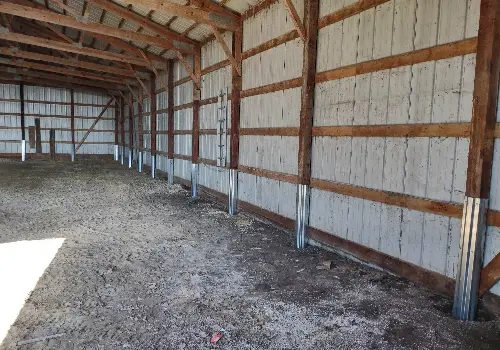
The portion of a wood column at or near grade deserves particular attention because it can experience recurring exposure to soil and moisture. Actual deterioration patterns vary according to the building, drainage, materials, and site conditions.
Proper treatment helps wood withstand demanding exposure conditions, but contractors still need to consider drainage, moisture, installation, and the appropriate treatment category. Pressure treatment should not be treated as a substitute for good construction practices.
Some deteriorated columns may be candidates for specialized repair systems such as Anthem Built's Column Repair Sleeves. The existing condition should be evaluated first to determine whether a particular repair product is appropriate.
Contractors already familiar with post-frame construction have much of the knowledge needed to recognize common column problems. Adding specialized post-frame repair products can create opportunities to serve owners of aging barns, agricultural buildings, shops, and other existing structures without limiting the business to new builds.
Column Repair Sleeves are designed for applicable compromised wood-column applications. They reinforce the column base without requiring the same approach as completely replacing the existing post. For contractors, Repair Sleeves provide another tool for approaching existing buildings where column deterioration has already occurred.
Column Covers are designed to enclose the post and provide a barrier against further moisture exposure. They can be used in conjunction with Anthem Built's Repair Sleeves where the application calls for both repair and protection.
Not every post-frame column is embedded in soil. For columns supported on concrete, Anthem Built offers Repair Sockets designed to securely connect the column base to concrete while protecting the vulnerable lower portion of the post.
Wood grade boards occupy another moisture-prone location along the bottom of a post-frame wall and can eventually warp or deteriorate. Anthem Built's Steel Grade Boards provide a coated-steel alternative for contractors looking to avoid using wood in this location.
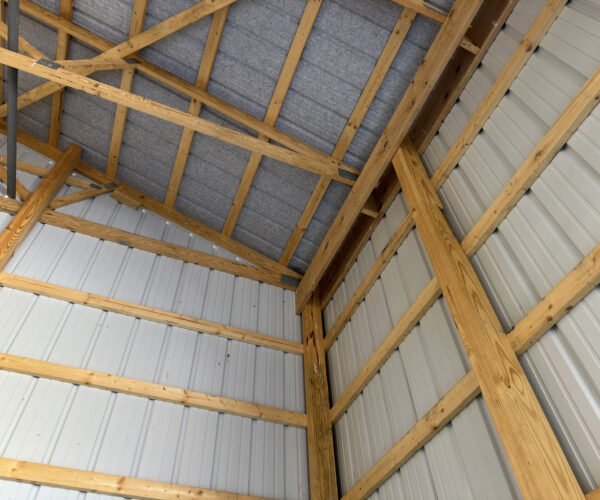
So, to answer, “How do I keep my pole barn posts from rotting?,” start by limiting unnecessary moisture exposure. Use appropriately treated materials, plan drainage carefully, consider methods that separate or protect wood from soil, and inspect columns as the building ages.
For contractors, the other half of the equation is knowing what to do when deterioration has already begun. That’s where specialized post-frame repair knowledge can become an additional business opportunity.
Anthem Built supplies contractor-focused products for post-frame construction and repair throughout the Midwest and nationwide. Explore Column Repair Sleeves, Column Covers, Repair Sockets, and Steel Grade Boards to find practical solutions for protecting new construction and addressing applicable problems in existing buildings.
Then, get in touch by contacting us at today at (309) 463-2777.